
Elseway: Into the Story
OffAtom Inc.Entertainment
3.787.00 Reviews
- Version
- 1.4.4
- Installs
- 10.00K
- Age Rating
- Teen
Screenshots
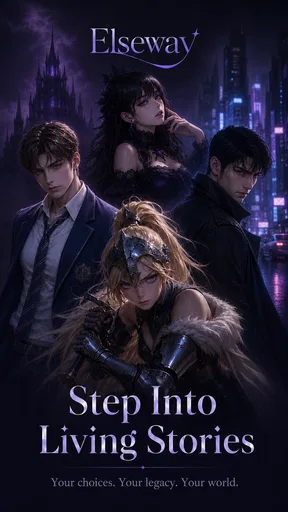
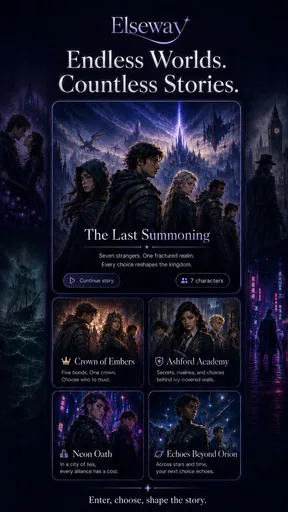
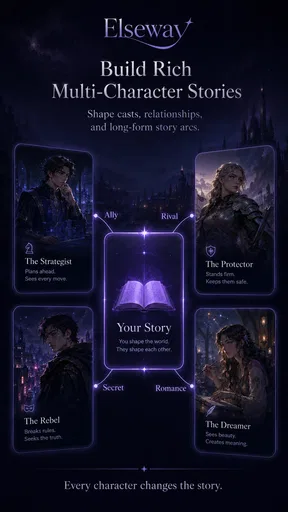
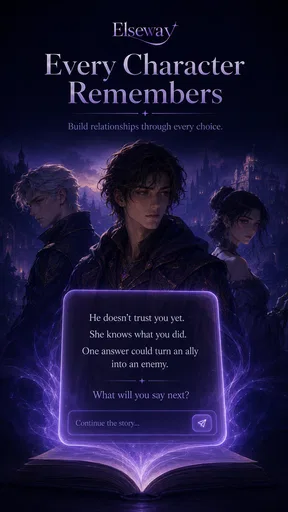
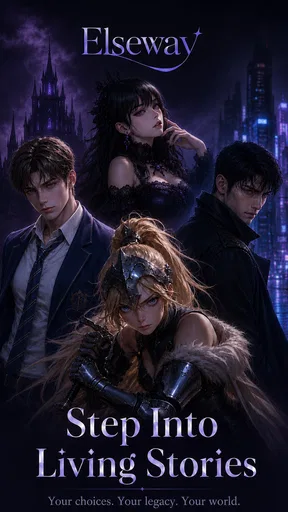
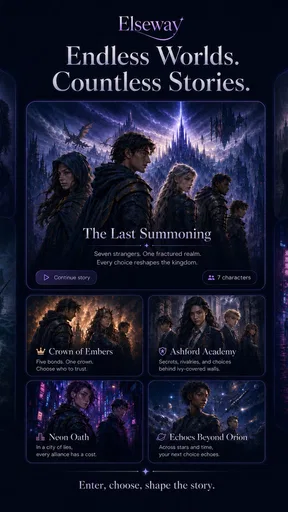
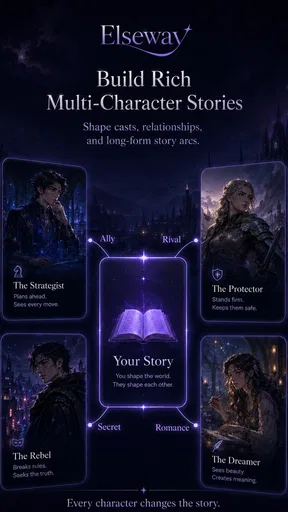
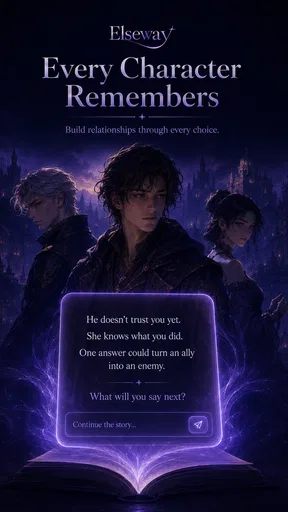
Our Review of Elseway: Into the Story
 Analysis by Appyee
I came away from Elseway: Into the Story with the feeling that it is trying to turn reading into a conversation rather than a one-way activity. It belongs to the entertainment category, but its appeal is closer to interactive fiction than to a conventional video app or a simple chatbot. The central idea is multi-character AI storytelling: instead of following one fixed narrator, you engage with a story world populated by several characters whose exchanges can make the experience feel more personal and unpredictable.
That concept is the reason I would recommend giving it a thoughtful trial, especially if you enjoy experimenting with fictional personalities and shaping the direction of a scene. It is free to install, which makes the first step easy, although the in-app purchase range means I would not treat it as a completely cost-free hobby without checking what is available before spending. My overall view is positive but measured: this is an interesting entertainment app for people who like interactive story ideas, not a replacement for a polished novel, a full game, or a focused writing tool.
How the multi-character story idea feels in practice
The most important thing to understand is that the attraction is not simply “AI writes a story for me.” The more distinctive experience comes from having several fictional voices in the same imaginative space. That changes how I approach a session. I am not only asking what happens next; I am also watching how different characters might react, disagree, support one another, or pull the scene in separate directions.
That makes the app especially suitable for short bursts of entertainment. I can open it when I want something more active than scrolling through a streaming catalog, but less demanding than starting a long game. A few minutes can be enough to test a scene, continue a conversation, or see whether a character combination creates an interesting turn. The format encourages curiosity because the next response feels less predetermined than it would in a standard branching story.
At its best, the app gives me a sense of participation. I am not merely consuming dialogue that somebody else has already written. My prompts, choices, and tone can influence the direction of the exchange. That does not automatically make every response brilliant, but it does create a different relationship with the story. I pay more attention because I am partly responsible for keeping the scene coherent and entertaining.
The multi-character approach also offers a practical advantage for people who struggle to begin creative writing. Rather than facing an empty document, I can use a fictional exchange as a starting point. A tense conversation can suggest a plot problem, a friendship dynamic can reveal a character trait, and an unexpected response can provide a new direction. I would not rely on every generated idea as finished material, but the app can function as a low-pressure brainstorming companion.
Where the experience is strongest
The strongest use case is improvisational entertainment. If I want a fixed story with carefully controlled pacing, I would choose a book, a television series, or a traditional narrative game. If I want to participate in a fictional situation and see how multiple personalities interact, Elseway has a clearer reason to exist.
I also found the format more useful when I entered with a small intention instead of a vague command. For example, I might decide that a scene should begin with two characters hiding a mistake while a third character starts asking questions. That simple setup gives the interaction tension and gives me something specific to evaluate. A broad request such as “tell me an exciting story” leaves too much room for a bland result.
A helpful habit is to treat each character as having a job in the scene. One can provide skepticism, another can push the action forward, and a third can add emotional pressure. This is not a formal feature I would describe as a guaranteed writing system; it is a way I found to get more value from the multi-character premise. When everyone is asked to do the same thing, the conversation can lose contrast. When the roles are distinct, the scene has a better chance of feeling alive.
Another useful workflow is to start with a contained situation rather than an enormous fictional universe. A single room, a difficult decision, or a short journey gives the interaction boundaries. Once the scene has a clear problem, I can expand it if the responses remain engaging. Starting with too much background can make the experience feel unfocused, particularly when I am still learning how the app handles my prompts.
Everyday situations where it makes sense
Imagine that I have a long train ride and want entertainment that asks for more involvement than watching a familiar show. I could set up a small mystery with a detective, a nervous witness, and a friend who knows more than they admit. I would then guide the conversation, challenge contradictions, and see whether the characters produce a satisfying direction. The value is not necessarily in reaching a perfect conclusion. The fun is in testing the situation and deciding which thread deserves attention.
It can also work during a creative block. If I am trying to develop a fantasy scene, I might place an idealistic traveler, a cautious guide, and a rival in the same conversation. Their conflicting priorities can help me notice which kind of tension I actually want. I would then take the useful idea elsewhere and revise it myself. In that role, the app is more like a prompt generator with personalities than a substitute author.
For a group of friends, it could provide a playful storytelling activity, with one person suggesting the setting and others proposing interruptions or character reactions. I would keep expectations realistic, because the enjoyment depends heavily on whether everyone is comfortable improvising. It is not automatically a multiplayer party game simply because several characters appear in one story space.
Parents should also pay attention to the Teen content rating. I would not hand it to a younger child on the assumption that interactive fiction is automatically harmless. A teen-rated entertainment app deserves the same basic supervision and conversation about appropriate use as other services built around open-ended fictional interaction.
What I liked, and where the concept loses momentum
My favorite quality is the feeling of possibility. A conventional story usually asks me to accept the author’s sequence of events. Here, I can test alternate directions and see whether a character relationship becomes more interesting when I apply pressure. That makes the app appealing to readers who enjoy “what if” questions and to writers who like discovering ideas through dialogue.
The format is also less intimidating than a full creative-writing application. I do not need to plan chapters, design a complete setting, or understand a complicated interface before starting. I can begin with a situation and build outward. For casual users, that low-pressure entry point is a real strength.
Another advantage is replay value in the broad sense. The same premise can feel different when I change the tone, introduce a new conflict, or ask a character to defend an unpopular position. I would not measure that like the replayability of a game with carefully authored endings, but the open-ended nature gives me reasons to revisit an idea rather than finish it once and move on.
There is a useful distinction between novelty and depth here. The first unexpected response can be exciting, but novelty alone does not sustain a long session. I enjoyed the app more when I actively edited the direction of the conversation, corrected a misunderstanding, or narrowed the scene. In other words, the user’s judgment matters. Someone who wants to sit back and receive a flawless story may find the experience less satisfying than someone willing to guide it.
The main weakness is consistency
The same openness that makes the app interesting can also make it uneven. AI-generated storytelling may lose track of emotional details, soften a conflict too quickly, or produce dialogue that sounds more functional than distinctive. When several characters are involved, consistency becomes even more important: I need to know who wants what and why their responses differ. If those distinctions blur, the central advantage of the format weakens.
This is the biggest limitation I would explain to a friend before recommending it. The app can create a promising setup, but I should be prepared to steer the scene rather than expect a perfectly managed narrative. I may need to restate a character’s goal, remind the conversation of an earlier detail, or reject a response that takes the story somewhere unhelpful. That makes the experience interactive in a genuine sense, but it also makes it work.
The app is therefore not ideal for someone who wants a finished, polished plot every time. A carefully written interactive novel will usually offer stronger pacing, more reliable characterization, and more deliberate endings. A standard chatbot may be better for direct questions or practical conversation. A social entertainment platform may be better for real human interaction. Elseway occupies a narrower space between those alternatives: fictional, participatory, and centered on several character voices.
I would also approach the purchase model carefully. The app itself is free, but optional purchases range from $5.99 to $359.99 per item. That is a wide span, and it makes it important for me to understand what I am unlocking before confirming a transaction. I would begin with the free experience, decide whether the storytelling format genuinely fits my habits, and avoid paying simply because a session has produced one particularly good scene.
That advice is especially relevant because the app’s entertainment value is subjective. If I love the concept but use it only occasionally, a high-priced option may not make sense. If I return often and clearly understand how a purchase changes my experience, I can make a more informed decision. Either way, the free entry point is the sensible place to judge the app.
Practical details before installing
Elseway is made by OffAtom Inc. and is available as a free app for Android users running version 7.0 or later. The current version is 1.4.4, and the app has passed the ten-thousand-install mark. Those details suggest that it is accessible to people using older compatible Android devices, although compatibility alone does not guarantee that every phone will feel equally comfortable for extended reading and typing.
The public response is mixed rather than universally enthusiastic, with an average rating of 3.7 from around one hundred ratings and roughly eighty reviews. I read that as a reason to approach it with curiosity instead of assuming it will work perfectly for everyone. The concept is specific enough that personal preference matters: people who enjoy interactive character experiments may value it more than people looking for conventional entertainment.
Because it is rated Teen, I would consider the intended audience before installing it for a shared family device. I would also think about how much typing I enjoy on a phone. The app’s premise rewards active participation, so someone who dislikes writing prompts or guiding fictional conversations may not get much from it, even if the idea sounds appealing at first.
Who should try it, and who should skip it
I would recommend it to readers who enjoy character-driven fiction, improvisation, role-play, and alternate story paths. It is a particularly good fit for someone who wants a creative pastime that can be casual but still asks for imagination. Aspiring writers may appreciate it as a way to test dialogue dynamics, provided they treat the output as raw material rather than publication-ready prose.
It may also suit people who have already tried ordinary AI chat and found factual conversation uninteresting. The fictional setting gives the interaction a clearer purpose. Instead of asking for information, I am testing a relationship, a conflict, or a dramatic possibility. That focus can make the experience more engaging than an open-ended chat with no story objective.
I would skip it if my priority is a tightly authored narrative with dependable continuity. I would also choose another option if I want competitive gameplay, visual exploration, or a large social community. The app’s value is concentrated in its character-based storytelling idea; it does not need to be everything, and users should not judge it by standards that belong to other entertainment formats.
For younger users, I would follow the Teen rating rather than treating the app as a children’s storybook. For users concerned about spending, I would stay with the free tier until the experience has earned a place in their routine. Those two decisions—audience suitability and purchase restraint—will probably matter more than the download itself.
My verdict after using it as an entertainment app
Elseway: Into the Story is most successful when I approach it as a flexible fictional playground. The multi-character premise gives ordinary AI storytelling a more dramatic shape, and it creates useful opportunities for improvisation, scene testing, and casual creative practice. I especially like the way a simple conflict can become more interesting when several fictional perspectives push against one another.
Its weakness is equally clear: the user has to help maintain quality. Character voices may not always feel sharply separated, and a promising scene can lose direction if I do not guide it. That is not a deal-breaker for me, because active steering is part of the appeal, but it is a poor match for anyone expecting a finished story with the consistency of professionally edited fiction.
The free starting point makes trying it reasonable, while the Teen rating and broad in-app purchase range call for sensible judgment. I would install it for an evening of experimentation, a writing prompt session, or a short creative break. I would not subscribe to the idea that it replaces books, games, or human conversation.
My recommendation is therefore specific: try it if you want to participate in AI-generated stories and enjoy shaping character interactions. Give it a pass if you need polished plots, practical answers, or a conventional game loop. For the right audience, the real strength is not passive storytelling but the ability to influence a small fictional ensemble. That makes it an intriguing entertainment app, even if its results are best enjoyed with curiosity, patience, and a willingness to edit the story as it unfolds.
Verdict
Strengths of Elseway: Into the Story
- Branching choices make each playthrough feel personal.
- Short chapters are easy to enjoy during quick breaks.
- Atmospheric visuals support the game’s emotional storytelling.
- Different endings encourage replaying the story.
- Simple controls keep the focus on decisions and dialogue.
Limitations of Elseway: Into the Story
- Some choices feel less impactful than their descriptions suggest.
- The story can become confusing when timelines or paths overlap.
- Replay value depends heavily on how much you enjoy rereading scenes.
- Progress may feel slow if you prefer action-focused gameplay.
- Certain scenes lack context unless you carefully follow every detail.
Similar Picks in This Category
View All
Google Play Games
Google LLC3.9

Netflix
Netflix, Inc.4.8

YouTube Kids
Google LLC4.2

Disney+
Disney4.4

Prime Video
Amazon Mobile LLC4.7

Steam
Valve Corporation3.2
Frequently Asked Questions
What is Elseway: Into the Story?
Elseway: Into the Story is an interactive narrative adventure that places you inside a branching story rather than presenting a traditional game with constant action. You explore scenes, read dialogue, make decisions, and influence how events develop. The experience is designed for players who enjoy character-driven storytelling, mystery, and discovering different outcomes through their choices.
How does gameplay work in Elseway: Into the Story?
The main gameplay focuses on exploring the story and making meaningful decisions. You may need to examine situations, follow conversations, and choose responses that affect relationships or future events. Instead of relying on fast reflexes, the app rewards attention and curiosity. Your decisions can lead the narrative in different directions, encouraging you to replay sections and compare alternative possibilities.
Is Elseway: Into the Story suitable for all ages?
The game may be appealing to teenagers and adults who enjoy interactive fiction, but it is important to check the official age rating before downloading. Narrative adventures can include mature themes, emotional situations, suspense, or language that may not be appropriate for younger players. Parents should also review the store description and any content warnings available for their region.
Does Elseway: Into the Story require an internet connection?
Whether an internet connection is needed can depend on the platform version, installation process, and any online features included by the developer. The game may require connectivity for downloading story content, updates, advertisements, analytics, or purchases, even if much of the narrative can later be played offline. Check the current App Store or Google Play listing before installing.
Is Elseway: Into the Story free to download?
The download price and available in-app purchases may vary between Android and iOS, as well as by country. Before proceeding, review the store page carefully to see whether the game is free, paid, supported by advertising, or offers optional purchases for additional content. If you prefer a complete experience without unexpected costs, confirm the payment model and purchase details first.
